


Piston rings seal gas pressure to prevent leakage across the compressor piston from one side to the other. They compress gas/air by sealing against the cylinder bore.
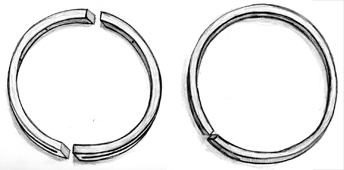
Piston rings are available in angle‑cut, butt‑cut or step‑cut designs.
Piston‑ring materials and designs can be adapted for both lubricated and non‑lubricated applications.
Pressure‑balanced rings may be used in high‑pressure applications to help reduce stresses associated with pressure loading along the cylinder wall.
Experienced personnel are ready to provide support for all types of applications and operating environments.
Piston rings are available in angle‑cut, butt‑cut or step‑cut designs.
Guide rings prevent contact between the compressor piston and the cylinder wall. Such contact may cause problems including excessive wear, which can necessitate replacement of the piston or liner. Guide rings / guide bands are typically made of low‑friction materials such as Teflon compounds; they are also available in bronze or PEEK grades for severe‑duty high‑temperature applications.
Guide rings are offered in solid, angle‑cut, butt‑cut and step‑cut designs.
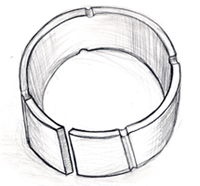
The primary function of oil wiper rings is to wipe surface oil from the compressor rod and return it to the crankcase. The narrow scraping edge on the oil wiper ring “wipes off” oil from the rod, with radially‑cut grooves for liquid drainage from the ring. An oil wiper ring’s sole function is to wipe oil from the rod; however, it may also be used in combination with other ring designs to deliver both wiping and sealing benefits.
Types: ‑ 1‑piece Radial‑Cut Scraper Edge ‑ 2‑piece Radial‑Cut Scraper Edge ‑ 3‑piece Radial‑Cut Scraper Edge
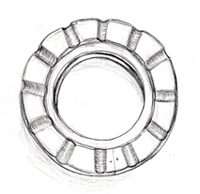
Pressure packing consists of a set of rings that provide sealing on the piston rod to prevent compressed‑gas leakage.
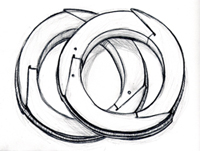
01 Damping Ring
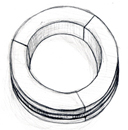
02 Radial Tangential Ring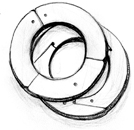
03 Double Tangential Ring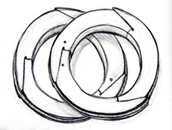
04 Tangential Ring with Support Ring
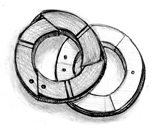
3‑piece Low‑Pressure Seal – Single‑Acting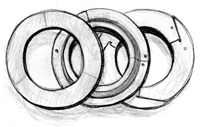
06
5‑piece Low‑Pressure Seal – Double‑Acting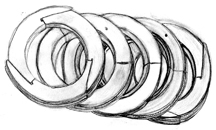
 |
TELEPHONE |
 |
Address:18 Kailu Avenue, Jianshe Road, Liangxiang, Fangshan District, Beijing |
 |
Email:info@taneor.com |
 |
Tel:(+86)13601381607 |

